
January 31, 2022
0
Platform Power

Thousands of people took action in the days before the Digital Services Act (DSA) vote in the EU Parliament, asking Members of the EU Parliament (MEPs) to end surveillance advertising.

As part of the Platform Power campaign, we have coordinated with many civil society organisations and raised our voices for stronger laws against the business model of Big Tech online platforms. Together, we succesfully pressured law-makers to put people at the center of the debate.

On 20 January 2022, the Members of the EU Parliament (MEPs) decided BigTech platforms should no longer be allowed to use surveillance ads on children and have significantly limited surveillance ads for adults. More, the EU Parliament voted BigTech platforms should be prohibited from using ‘dark patterns’, so called manipulative interfaces 

Banning surveillance ads

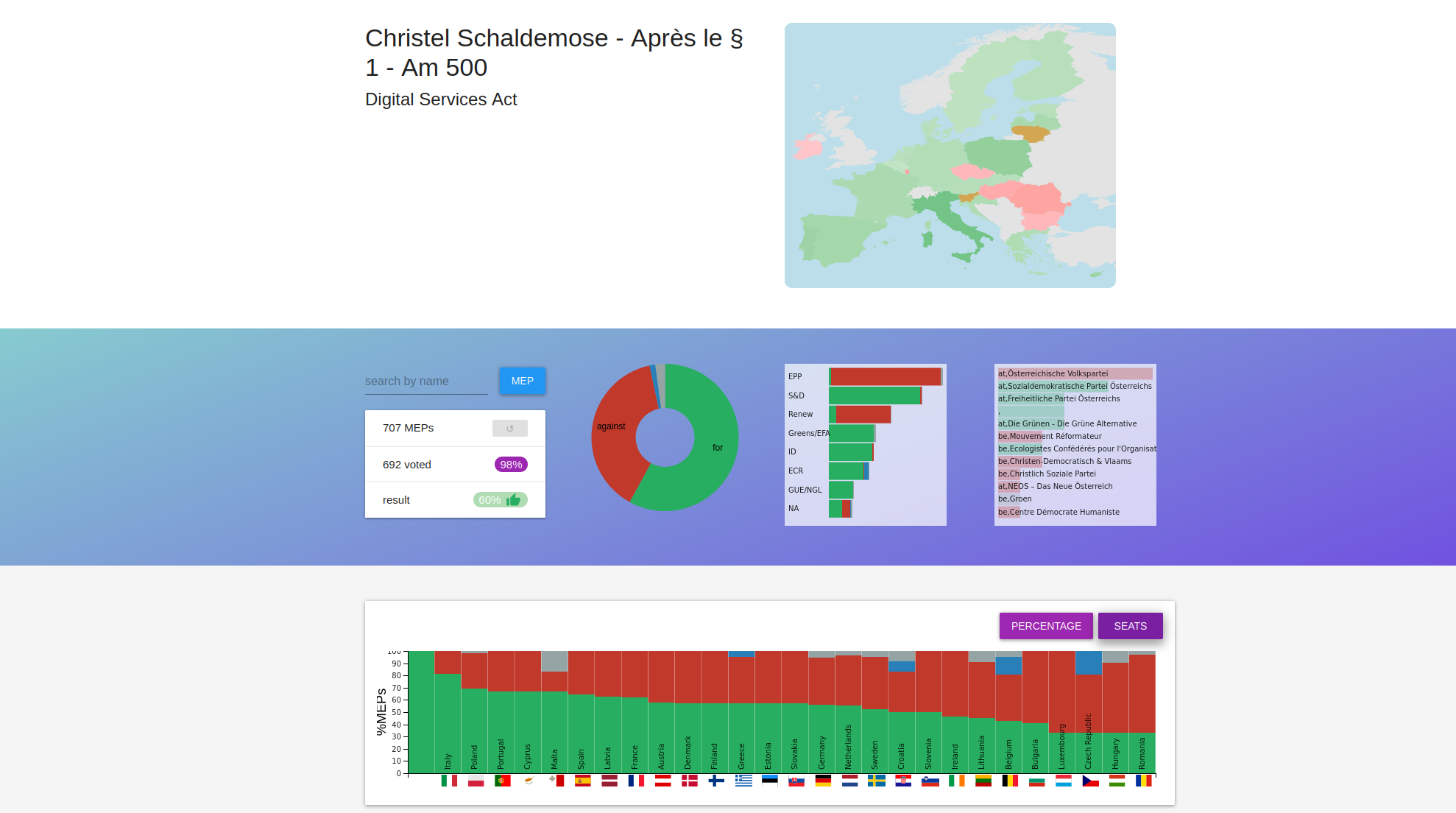
See below how our representatives in the EU Parliament voted on the restrictions to surveillance ads.

Despite the fact that MEPs did not vote for a full ban on surveillance ads, they voted a strong amendment that severely restricted the use of people’s most sensitive personal data to target them with paid messages. In detail, the amendment prohibits the targeting or amplifications techniques that process, reveal or infer personal data of children or the sensible data of adults – for the purpose of displaying advertisement. Such sensible data includes religious beliefs, sexual orientation and racial or ethnic origin.
Prohibition on ‘dark patterns

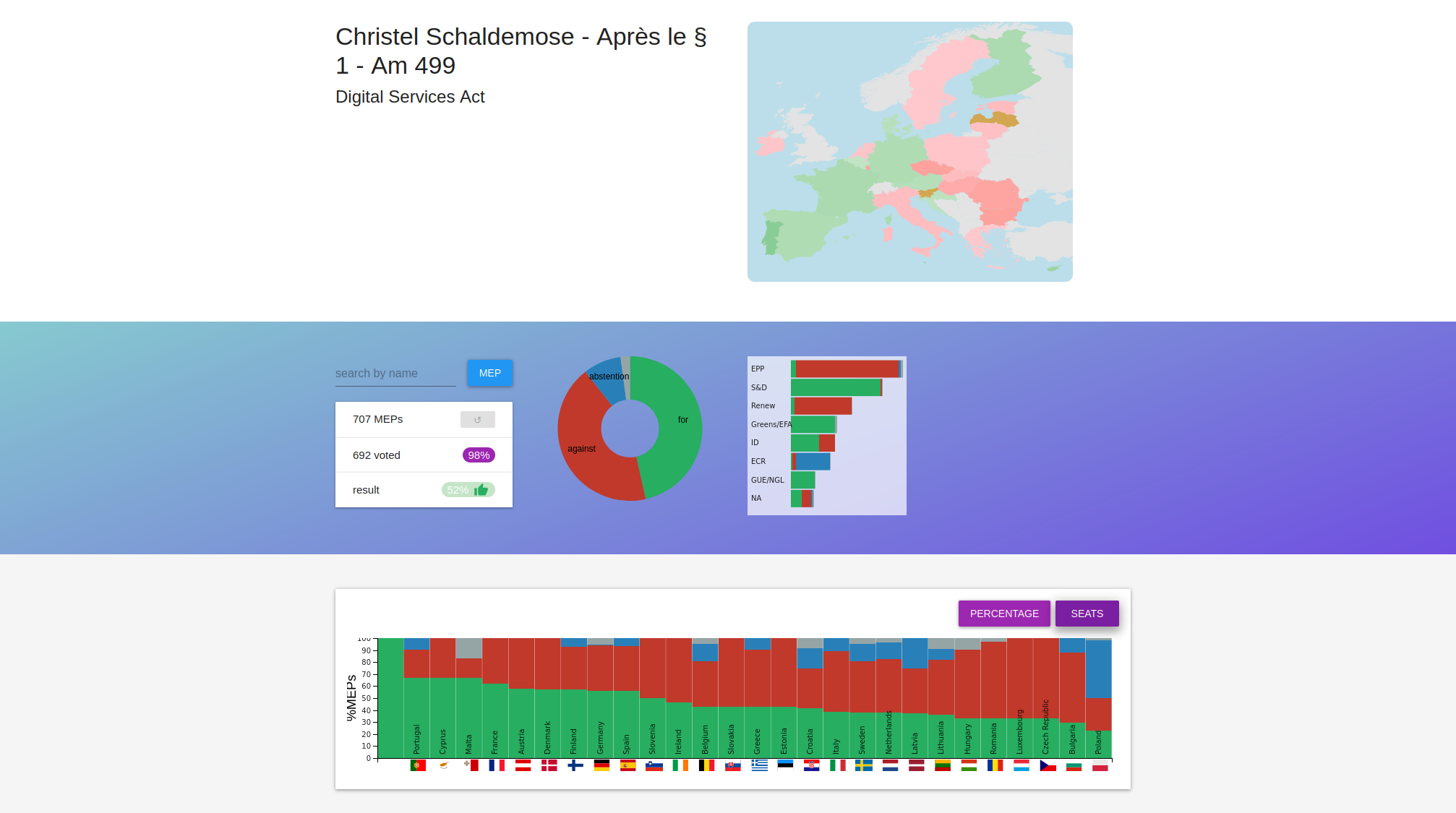
MEPs also agreed to prohibit the use of ‘dark patterns’, so called manipulative interfaces that are designed to trick users into unintentionally consenting to sharing their personal data. Dark patterns are systematically used by Big Tech platforms like Facebook and Youtube but also by countless apps and websites to push users into consenting to surveillance based advertising.

See below how our representatives in the EU Parliament voted on ending ‘dark patterns’
People power makes change happen

The actions digital rights activists have taken ahead of the vote have been crucial for this success. We cherish the energy you put into making the digitalised society one based on fairness, equal opportunities, choice and justice.

The January DSA vote in the EU Parliament emphasised important protections for our rights – also in regards to people’s freedom of expression online and right to secure communications.

Moving ahead, the EU negotiations on how to regulate BigTech go into trilogues – a process notorious for its opacity and lack of democratic scrutiny. Do you want to know more about how the EU works and why the trilogues are special?

Let us know with a vote in the Twitter poll below.

Big Tech
Platform Power
December 21, 2021
0
Platform Power

Today, 15th of December, the European Parliament has approved its position on the Digital Markets Act (DMA). While unfortunately, it scales down the DMA scope by limiting who will be considered a gatekeeper, the Parliament position adds a number of notable improvements from a digital rights perspective that help challenge digital gatekeepers’ overwhelming power.


In particular, European Digital Rights (EDRi) welcomes the addition of interoperability requirements for instant messaging and social media services provided by gatekeepers. Such core service interoperability is a pro-competitive tool that can play a major role in ensuring market contestability, innovation, competition and the empowerment of all of us.

“Enabling providers of smaller social media and messenger apps to interoperate with gatekeeper services is an important milestone in bringing back real choice for people.”

– Jan Penfrat, Senior Policy Advisor, EDRi.

While we welcome the Parliament position’s clear prohibition for gatekeepers to combine or cross-use personal data without consent, we call on the Rapporteur to close potential legal loopholes in article 5.1(a) that could allow gatekeepers to circumvent their legal obligation under GDPR to request consent for each processing purpose.

We support the new prohibition of dark patterns and encourage negotiators to ensure that clearer language is used to describe how regular dark patterns look like as has been the case in the European Parliament IMCO Committee’s position on the Digital Services Act. Dark patterns are user interface designs deliberately built to push users into making a certain choice that they would otherwise never have made, like the way most cookie banners work today.

“We are very glad to see that the Parliament is taking a first step towards a fair and interoperable market. It will now be important to put the objective of ending corporate concentration into a clear and enforceable language.”

– Christoph Schmon, International Policy Director, EDRi member, Electronic Frontier Foundation (EFF).

Just like the original European Commission proposal, the Parliament’s DMA position contains a number of additional important “dos and don’ts” that will increase user freedom and protection, as well as hopefully lead to a more diverse digital environment for all. For example, the freedom to install and remove the apps people actually prefer as well as to choose the best app stores rather than the one proscribed by the gatekeeper.

EDRi also very much welcomes the Parliament’s clear commitment to enabling end-users, consumer groups and other civil society organisations to support the DMA’s enforcement regime with a right to lodge complaints, provide input to the European Commission’s own investigations, and access documents relating to ongoing cases.

“Participation of end users and civil society organisations in the monitoring and enforcement of the DMA is fundamental to its successful implementation and to redress the imbalance of power between individuals and big platforms.”

– Tomaso Falchetta, Global Policy Lead, EDRi member, Privacy International.

The European Parliament and the Council are planning to commence trialogue negotiations for the Digital Markets Act in early 2022, expecting to finalise the Regulation by the spring.

Big Tech
Platform Power